For decades, branding has been a visual discipline first. Logos, colors, typography, layouts. But the next phase of branding is not something you see. It is something you hear, interact with, and sometimes barely notice at all. Voice assistants, AI-driven interfaces, and ambient technology are reshaping how people experience brands. This shift challenges many of the assumptions designers and marketeers have relied on for years. And here’s the uncomfortable part: Many brands are not ready for that shift. Not because the technology is too complex, but because their brand only works when it can be seen. If you remove the logo, the color, and the layout, what exactly is left?
What you do when no one is looking
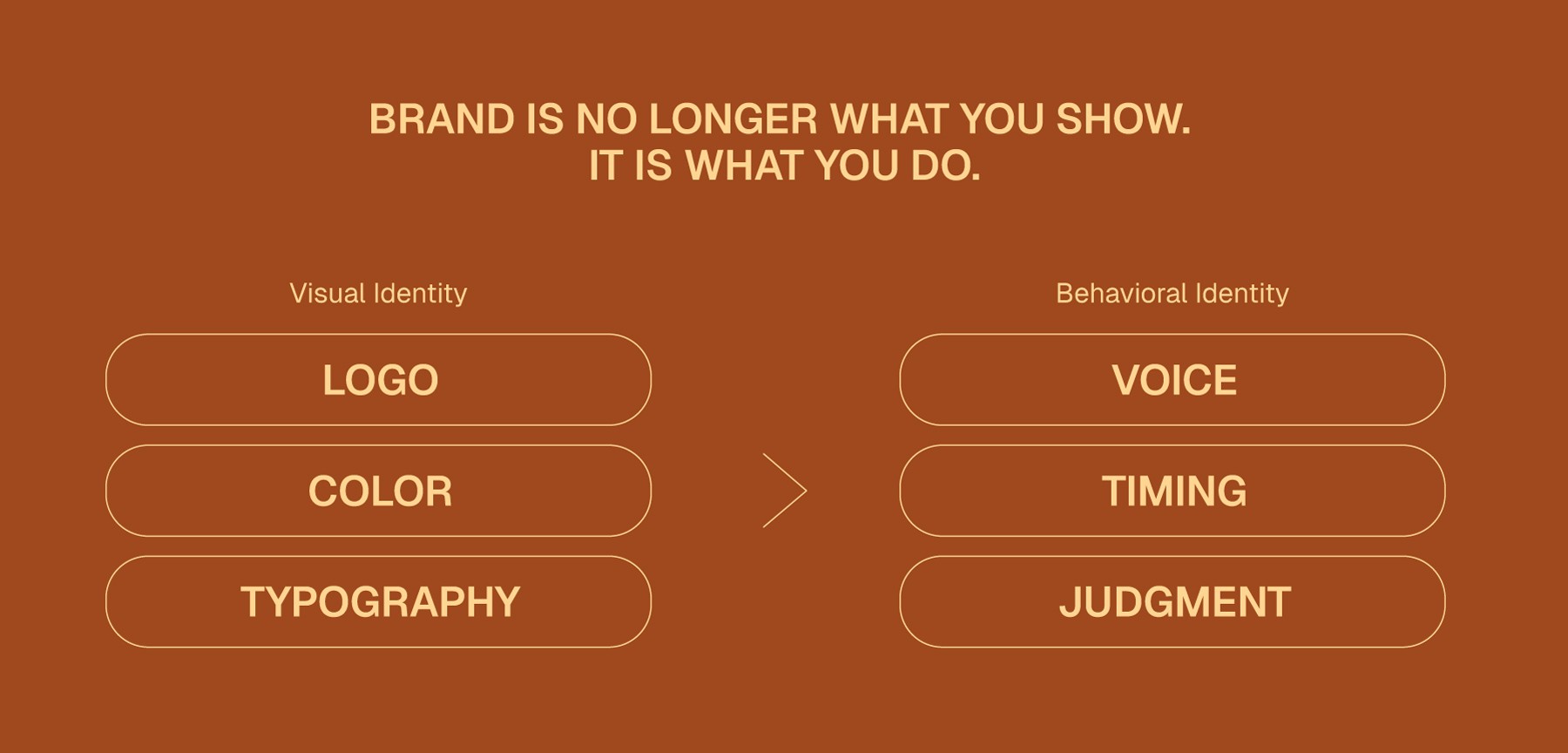
In traditional branding, consistency was largely visual. If everything looked aligned, the brand felt aligned. That logic does not work in voice and AI-driven environments. When a user speaks to a product, a brand shows up through tone, confidence, and clarity. When an AI system makes recommendations, a brand is expressed through judgment. When technology becomes ambient, a brand is revealed through timing and rhythm.
This is where things get interesting, and where weak brand foundations start to show. A brand without a clear point of view becomes polite but empty. A brand without strong values becomes helpful but generic. A brand without internal alignment becomes inconsistent at scale. AI seems to be exposing these issues quite well, and we should be better prepared to start having these conversations.
From visual to behavioral identity
If branding was once about how things look, it is now becoming more and more about how things behave. Behavioral identity is about defining how a brand responds, decides, and adapts across situations that cannot be fully designed in advance. Voice interfaces, AI systems, and ambient products all introduce variability. This means brand systems can no longer rely solely on static rules. Color palettes and typography still matter, but they do not guide an AI on how confident to sound when a user is stressed, or how much context to provide when a decision carries real consequences.
Behavioral identity answers questions visual identity never had to, like:
How does the brand show confidence without any visual support?
When should it speak, and when should it stay silent?
How does the brand behave under pressure?
What does empathy look like in action, not messaging?
You may think at first that these are copy questions, but they’re actually strategic ones.
'The more invisible the interface, the more visible the brand.'
Voice as a philosophy
Voice is one of the most revealing brand touchpoints precisely because there’s no layout to hide behind. Unfortunately, it is often treated as an afterthought, something to be added once the product is already defined. Brands that do so often default to generic, overly polite, or awkwardly robotic language. This is a big mistake, and usually results in an experience that feels technically functional but emotionally empty
The thing is, strong voice design is not about sounding human or clever, but about being intentional. Especially in uncomfortable moments like errors, uncertainty, or high-stakes decisions. It reveals whether a brand actually knows who it is, or whether visuals have been doing that work instead.
AI as a way to expose laziness
AI is often framed as a threat to creativity or differentiation. In practice, it acts more like a mirror. If a brand’s positioning is vague, AI outputs will be vague. If values are aspirational rather than operational, AI decisions will feel inconsistent. This is why AI has quietly become a brand stress test. Brands with clear principles and decision frameworks gain leverage. At this stage, brand guidelines stop being rulebooks and start becoming systems for judgment. The question shifts from ‘does this look on brand’ to ‘would we stand behind this decision?’.
Ambient tech takes discipline
Ambient technology pushes branding into the background, often by design. There are fewer interfaces, fewer moments to announce presence, and sometimes no visible interaction at all. What remains is timing, restraint, and usefulness. In ambient experiences, brand is expressed through small decisions like when not to interrupt, when to wait instead of act, and when automation helps vs and when it oversteps.
These moments rarely appear in case studies, but they shape trust more than any campaign ever will. Restraint communicates confidence. Silence can signal respect. Knowing when not to act is often the most mature brand decision available. This can feel uncomfortable for brands that equate visibility with value.
Designing for trust, not novelty
As voice, AI, and ambient systems take on more responsibility, users are no longer just interacting with brands. They are delegating to them. This raises the bar for brand and design, which means our roles as designers and art directors are shifting. We are no longer just shaping how things look, but defining how systems speak, decide, and act when no one is watching. That responsibility is heavier than choosing colors, but I’d say is far more interesting.
published on plus972.com
related articles